

We're Here to Assist You
Ants: Recent Job & Some Homeowner Tips
Category: Holiday
Published: 01 May, 2026
By Modest – Owner of MA Pest Control
What I Walked Into
May in London is when ant calls really pick up. By this time, the weather is warmer, and ants are actively moving around looking for food.
A few days ago, I got a call from a homeowner in London. He said,
“We’ve got ants in the kitchen every morning. We cleaned them up, but they’re back the next day.”
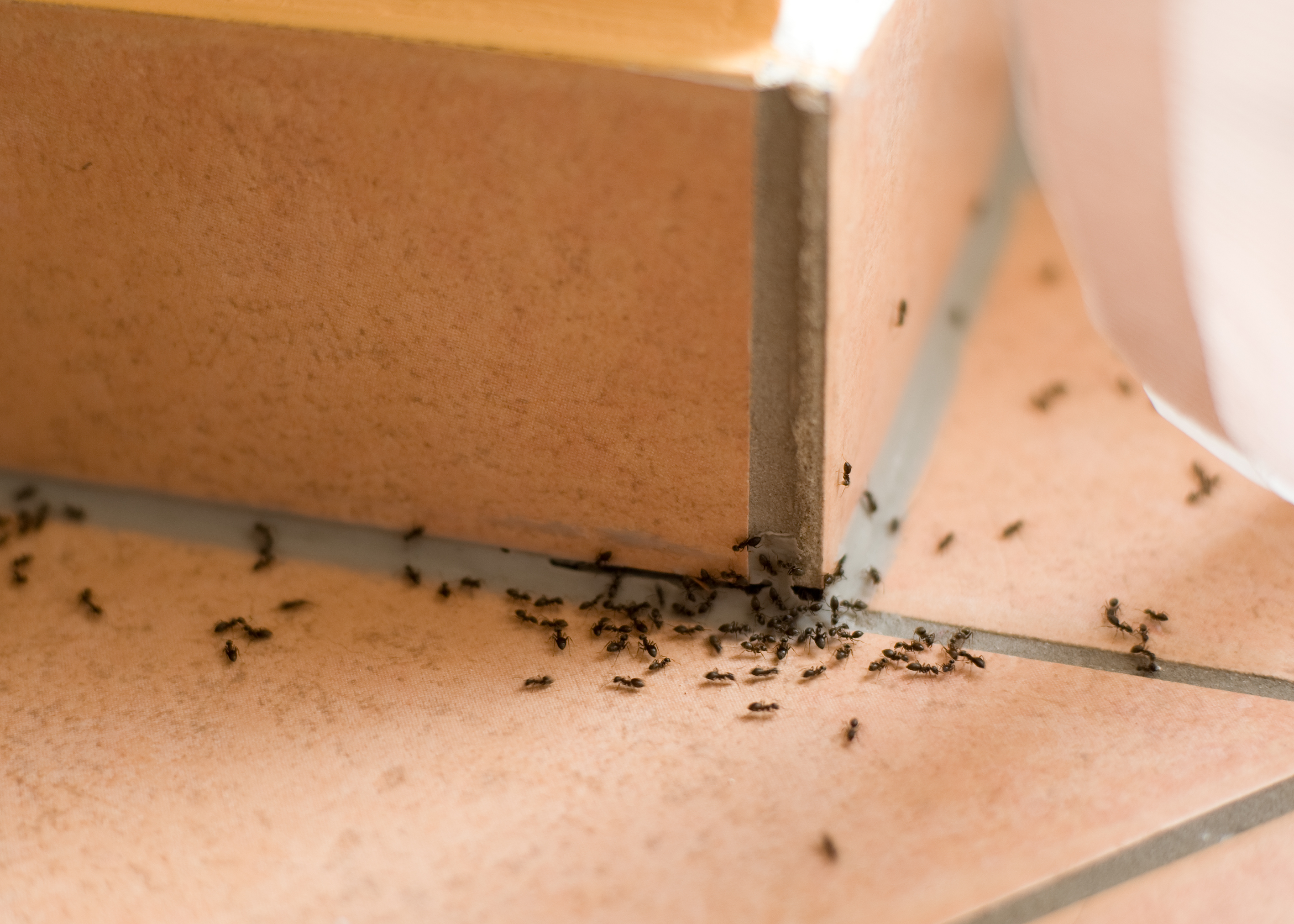
When I arrived, it was a typical semi-detached house. Clean, well looked after, nothing out of place. But near the back door, along the skirting board, there was a steady line of small black ants moving in and out.
He showed me where they’d been appearing — mostly near the sink, along the floor edges, and sometimes near the bin. They’d tried cleaning sprays and wiping everything down, but it didn’t stop the pattern.

The Problem
I usually see ant problems like this come down to access and a nearby nest.
I noticed a few things pretty quickly during the inspection. There were small gaps around the back door frame and threshold, which made it easy for ants to get inside. When I checked outside near the patio slabs, I could see clear activity showing there was a nest close to the home. The nest itself wasn’t inside, but the ants were coming in every day to forage.
I also saw that they were following the same paths inside. Once ants find food, they stick to those routes because of the scent trails they leave behind, even if the area gets cleaned. In the kitchen, there were a couple of small things keeping them interested, like food traces near the bin and a bit of moisture under the sink.
I could tell this wasn’t a heavy infestation inside the home. It was more of a steady flow coming in from outside, which is what makes it feel like it never really stops if the source isn’t taken care of.

The Process
The way I handle ant problems is by focusing on the colony, not just the ones you see moving around.
I started with a full inspection to get a clear picture of what was going on. That meant checking along skirting boards and floor edges, around door frames and entry points, under the sink and behind appliances, and then stepping outside to look at the areas near the house. Following those paths helps me understand exactly where the ants are coming from and how they’re moving through the space.
Once I had that mapped out, I moved into treatment. Instead of spraying everything, I used a professional bait along the active trail. The reason for that is simple. Ants carry the bait back to the nest, which allows it to reach the colony instead of just dealing with what’s visible on the surface. I also treated around the entry points to help reduce new ants from coming in.
After that, I went over a few prevention steps with the homeowner. I pointed out where small gaps should be sealed and explained how things like food waste and moisture were helping keep the ants active. In most cases, it’s a combination of proper treatment and a few small changes that leads to the best long-term result.
The Outcome
Within a couple of days, the number of ants dropped noticeably. The main trail that had been running along the skirting board started to break up, and instead of a steady line, there were only a few scattered ants moving around.
By the end of the week, there was no visible trail at all. I asked the homeowner to keep an eye on the usual spots — near the back door, along the floor edges, and around the bin. He said he might see the odd one here and there at first, which is normal, but nothing consistent like before.
The biggest change was in his routine. He told me he had got used to checking the floor every morning as soon as he walked into the kitchen. Once the activity stopped, that habit faded. He wasn’t thinking about it anymore.
The kitchen just felt normal again. No constant wiping down surfaces, no watching the same corner of the room, and no expectation of seeing ants every time he walked in.


DIY Advice
For ants, I always tell homeowners that a few simple habits can go a long way, especially during the warmer months when activity picks up.
Keeping food sealed is one of the biggest things. Even small crumbs, open packets, or minor spills can attract ants, so using sealed containers helps take that away. It also helps to empty bins regularly, since kitchen waste builds up fast and can draw ants in even when everything else looks clean.
Wiping surfaces properly makes a difference too, especially around the sink, counters, and food prep areas. Even small traces can bring ants back. I also recommend checking around doors, windows, and pipe entries for small gaps, because ants don’t need much space to get inside.
Another thing I point out is keeping floors and edges clean, since ants tend to travel along skirting boards and along those lines. Staying on top of those areas helps break their movement patterns.
These steps won’t remove an active nest on their own, but they do reduce what’s attracting ants and help keep the problem from building back up again.
"It's brighter than before!"
— Megan
Professional Insight
Ants are one of those pests that seem small, but they can become frustrating pretty quickly.
What I see most often is a nest somewhere outside the property, along with easy access points into the home. Homeowners are usually doing the right things like cleaning regularly, but the problem keeps coming back because the source hasn’t been dealt with.
Killing the ants you see doesn’t solve much if the colony is still active. That’s why I always focus on getting back to where they’re coming from instead of just treating the surface.
It’s not a complicated problem, but it does need to be handled the right way. Once the source is taken care of, the activity usually settles down fairly quickly.

Closing Thoughts
That job in London was pretty typical for May. As soon as the weather warms up, ants start showing up more often.
It doesn’t take much for them to get in, and once they find a route, they stick to it.
If you’re starting to see ants around your kitchen or near doors this month, it’s worth checking early rather than letting it build up.
If you’re in London and want someone to take a look, feel free to reach out. I’m always happy to check it properly and give straightforward advice.
– Modest
Areas
Address
Toronto Headquarters
20a Ladbroke Crescent, W11 1PS, London, UK


© 2026 MA Pest Control. All rights reserved.